
Canada's Northwest Territories in full fall glory

Updated: Jul 9, 2025
Why the remote Barrenlands are a dream for hikers, paddlers, photographers and stargazers

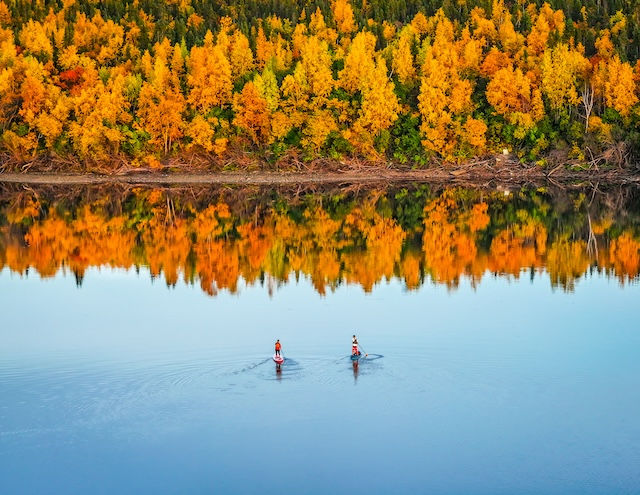
Don’t let the name fool you – the Northwest Territories’ Barrenlands are teeming with life. And never more so than in their full autumn glory. This tundra region northeast of Great Slave Lake gets its name from the lack of trees – a result of cold Arctic weather patterns. But near the end of August into early September, these low treeless plains burst into a kaleidoscope of yellows, oranges, greens, and reds. Migratory animals and birds fill the landscape and waterways. No wonder the region is considered a photographer’s paradise as well as a vaunted destination for late-season paddlers, hikers, and wildlife enthusiasts.
A photographer’s paradise
A tapestry of bright foliage makes the fall Barrenlands a dream for photographers of all skill levels. At sunset the long rays of the sun illuminate the land’s rich colours. The pristine wilderness is a draw for any naturalist wanting to learn more about the countless plants and animals that inhabit the Barrenlands.
Over the course of a few weeks, you’ll find the multi-coloured Barrenlands palette becomes a visual delight. Under clear turquoise skies, you can lose yourself in capturing those endlessly colourful vistas or picturing close-ups of the tiny red leaves and berries that carpet the land.
The diminutive arctic willow shrubs burst into fiery reds. A truly amazing plant that produces its own pesticide to keep insects away during summer’s short growing season, the willow also has edible leaves and its roots can be peeled and bitten to counter the pain of a sore throat. Arctic willow leaves turn cherry red as cooler, shorter days kickstart production of anthocyanin. This special compound sends nutrients up through the willow’s roots and may also play a protective role against winter’s extreme temperatures – and give the willow leaves their unmistakable hue.
You can also easily identify another plant – the dwarf birch – by its signature colour and shape. Initially, the dainty scallop-shaped leaves turn yellow before eventually becoming tinged with red and orange.
Other notable autumn plants that make the Barrenlands such a distinctive landscape include plump blueberries, crowberries, and lichens. Importantly, these also provide traditional sustenance for berry-pickers as well as grazing foods for many animals and birds.

A paddler’s dream
Local paddling operators are eager to help you navigate the Barrenlands’ iconic waterways – the Thelon, Coppermine, Burnside, Dubawnt, Lockhart and Back – and, along the way, you are very likely to see grizzlies, muskoxen and Arctic wolves. There’s always a chance to catch one more trophy fish before winter.
Pull your boat into a secluded bay and you may see ice coating the rocks or shaping into spiky ice shards. While today the Barrenlands’ environment is facing new changes, it’s still not unusual in autumn to spot an area of “aufeis” or overflow ice from the previous winter that makes it through the summer until the first flakes fly again.
Geology enthusiasts will appreciate the remnants of ancient geological activity. About 300 km north of Yellowknife lies the Acasta Gneiss. Dated at roughly four billion years old, it is considered to be the world’s oldest rock. The Barrenland’s larger Acasta Gneiss Complex also contains fragments of the Earth’s oldest know crust.
Despite the extreme of life in the Barrenlands, human history along its waterways is also rich. Indigenous people have hunted and gathered there for millennia, while Europeans including Samuel Hearne, came to the Barrenlands in 1769 in search of the Northwest Passage. Mineral prospecting now draws others searching for areas rich in diamonds.

A wildlife-watcher’s oasis
You will want to keep your binoculars handy as wildlife makes the most the last warm days. You are likely to spot many Northern animals, such as muskoxen, Arctic hares, Arctic foxes, snowy owls, ptarmigans, northern red-backed voles, red foxes, otters, and weasels. Foxes, wolves and bears also call the Barrenlands home. Caribou, nine herds altogether, traverse the Barrenlands we well.
In autumn, migratory birds like falcons, eagles, swans and loons also pass through the Barrenlands on their way south, while low-lying ptarmigans, still wearing their darker summer plumage, skitter around on the land.
On warm autumn days you can spot a rough-legged hawk warming up on a rock, or track the season’s last swans swimming an impossibly blue lake. Whether wildlife watching has been a lifelong passion, or something you’ve recently become fond of, local operators can guide you through this awe-inspiring landscape, share their knowledge of the stunning flora and fauna of the Barrenlands and help you perfectly capture memories that will last a lifetime.

And a stargazer’s delight
Whether you decide to deepen your experience of the Barrenlands by paddling, hiking or with your camera in hand, you will treasure the memories of this vibrant and unique environment. Whatever you do in the Barrenlands, don’t forget to look up at the dark starry skies at night. The endless canvas is a true gift for stargazers. And above the Barrenlands, you’re likely to see some of the brightest Northern Lights, even by the Northwest Territories’ spectacular standards!

Further information on the Northwest Territories can be found at www.spectacularnwt.com.


Comments